

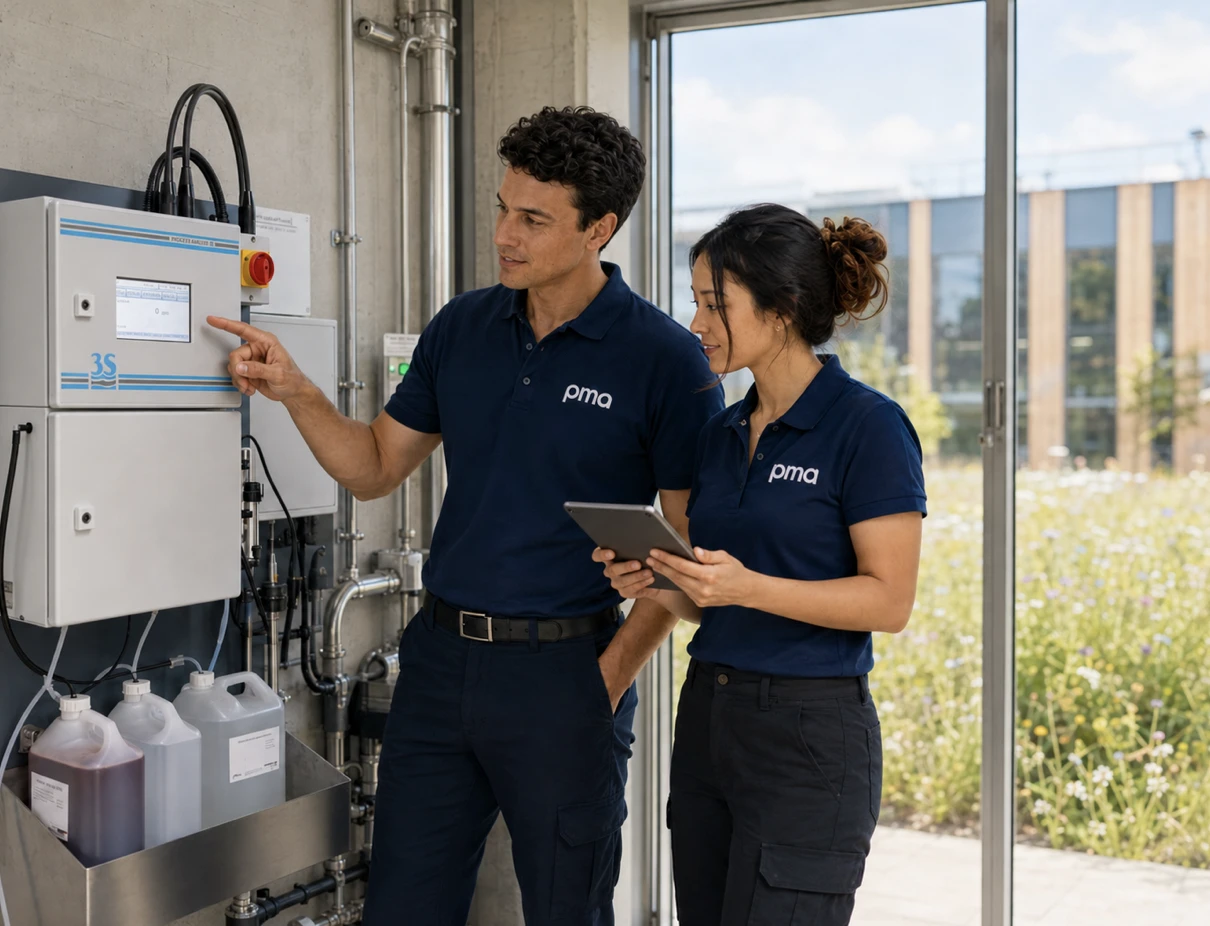
An online analyser may make measurements automatically, but dependable operation involves more than the analysis cycle itself. Wet-chemistry systems also need calibration, checks on analyser response and cleaning of the parts that come into contact with samples and reagents.
The 3S analyser brings calibration, validation and cleaning together as programmable automatic functions. For operators, the benefit is not that maintenance disappears. It is that important routine activities can become part of a planned analyser schedule instead of depending entirely on repeated manual intervention. Continue with the practical guide to reagent planning and analyser maintenance, or use the 3S technical resources hub.
Why routine analyser functions matter
Online water analysers are expected to operate between operator visits and to repeat the same analytical method many times. That places a different demand on the instrument from a one-off manual laboratory test.
For practical planning guidance, read Choosing an Online Measurement Interval.
A manual analyst can inspect the glassware, prepare fresh reagents, observe the reaction and decide whether something looks wrong during every test. An online analyser has to reproduce a programmed method automatically. Calibration, validation and cleaning therefore become important parts of maintaining confidence in that routine.
The appropriate schedule is not identical for every installation. A clean treated-water sample can behave very differently from raw water, industrial process water or wastewater. Parameter chemistry, sample solids, reagent consumption, analysis frequency and site conditions all influence the operating routine.
What automatic calibration does
Calibration establishes the relationship between a known standard and the response produced by the analyser. In a colorimetric system, that relationship allows the measured optical response to be translated into a reported concentration.
The 3S-CL supports programmable automatic calibration. This means the calibration routine can be scheduled at selected intervals rather than requiring an operator to initiate every routine calibration manually.
The exact calibration method depends on the analytical chemistry. Different parameters can have different calibration ranges, response characteristics and standard requirements. For that reason, a website or quotation should not describe one universal calibration routine as though it applies identically to every 3S configuration.
Why calibration should be logged and reviewed
Automation is most useful when it also gives operators information they can review. The 3S platform includes an integrated datalogger for analyser information, including measurement results and calibration-related data.
A calibration history can help engineers understand whether the instrument has remained stable or whether its response has been changing over time. A changing trend does not automatically identify the cause, but it gives the operator more context when reviewing the analyser, sample or reagent condition. For unexpected results, see the online water analyser alarm investigation plan for a structured set of checks before responding to a changing trend.
What validation adds beyond calibration
Calibration and validation are related, but they are not the same task. Calibration establishes or adjusts the analyser response against known standards. Validation is used as an additional check that the analyser is responding appropriately.
On the 3S platform, validation can be programmed at selectable intervals. That allows a regular check to become part of the instrument routine rather than something carried out only after an operator notices a suspicious result.
For operational teams, this can be useful because it provides another piece of information when reviewing analyser performance. Validation should still be interpreted alongside the process, sample and other available analytical information rather than treated as a substitute for every external check.
Why automatic cleaning is necessary in wet chemistry
The wet section of an online colorimetric analyser handles real water samples, chemical reagents and reaction products. These materials can leave deposits or contamination in the hydraulic system if they are not managed.
The 3S includes programmable automatic cleaning routines intended to help maintain the measurement system between planned maintenance visits. The cleaning schedule can be selected around the application.
This flexibility matters. Analyser cleaning should not be based on the assumption that every water sample behaves the same way. Suspended solids, hardness, biological activity, reagent chemistry and the frequency of analysis can all affect how quickly the wet section needs attention.
Automatic cleaning does not mean maintenance-free
This distinction is important for realistic online-analyser ownership. Automatic cleaning reduces repetitive routine intervention, but it does not remove the need for inspection, replacement of wear components, checking reagent condition or planned servicing.
General 3S-CL documentation indicates periodic maintenance, while also noting that some parameters and samples require more frequent attention. The right service interval should therefore be based on the installed application rather than a single marketing number.
For UK customers, 3S product support and PMA service and calibration support can be used to discuss the maintenance approach for a specific installation.
How programmable intervals help operators
One of the practical advantages of the 3S approach is that calibration, validation and cleaning are programmable rather than locked to one fixed schedule for every chemistry.
This allows the initial operating routine to be matched more closely to the parameter and sample. If site experience shows that a particular routine needs to occur more or less frequently, the schedule can be reviewed instead of treating the analyser as a completely fixed black box.
That does not mean intervals should be changed casually. Adjustments should be based on the analytical method, operating instructions, service history and real behaviour of the installed analyser.
The relationship between automatic functions and reagent use
Calibration and validation routines use standards or reagents, while normal analysis consumes the chemistry required by the selected parameter. Exact consumption therefore depends on the configured method and frequency of analysis. PMA reagent manufacturing supports the wider analytical system by providing UK-manufactured reagents and laboratory solutions for appropriate applications.
This is why total lifetime expenditure should be considered when specifying an analyser. Purchase price matters, but so do reagent consumption, service requirements and the amount of routine operator time needed to keep the measurement available.
Why visible analyser architecture helps maintenance
Automatic functions are more useful when the instrument remains understandable to the people who operate and service it. The 3S separates the electronics from the hydraulic compartment and keeps the main wet components accessible for inspection.
The sample pump, reagent pumps, measuring cell, tubing, valves and associated components can be related directly to the programmed sequence shown on the touchscreen. This helps operators understand that calibration, validation and cleaning are real analytical routines being carried out through the wet section, not simply software labels.
Where these functions are most valuable
Automatic analyser routines can support repeated wet-chemistry measurement across drinking-water treatment, selected wastewater nutrient applications, boiler and high-purity water, and industrial process water.
The exact benefit depends on the role of the measurement. The 3S applications overview and online analyser parameter range show the duties and chemistries that can be considered, but the final configuration must match the parameter, range and sample condition.
What should be considered when setting up automatic routines?
A useful starting routine should consider the chemistry and the real installation. Factors include the normal concentration range, sample cleanliness, analysis frequency, reagent stability, sample temperature, solids loading and the operational importance of the measurement.
It is also worth considering what the site wants to do with the analyser information. If operators routinely review calibration and validation records, the automatic functions become part of a wider measurement-management process rather than background tasks that nobody checks.
Automatic functions and compliance monitoring
Calibration, validation and cleaning can support confidence in routine analyser operation, but they should not be overstated. They do not by themselves prove regulatory compliance, replace statutory sampling or remove the need for appropriate quality-assurance procedures.
Where an analyser is used to support a compliance-related process, its role should be defined alongside the applicable permit, laboratory programme, site procedures and regulatory requirements.
Frequently asked questions
What is the difference between calibration and validation?
Calibration establishes or adjusts the relationship between analyser response and known standards. Validation provides a separate check that the analyser is responding appropriately.
Can the 3S calibration interval be changed?
The 3S-CL supports selectable programmed intervals. The appropriate setting depends on the configured analytical method and application.
Does automatic validation replace laboratory checks?
No. Validation is an analyser routine. Laboratory testing, statutory sampling and other independent checks remain necessary where required.
Does automatic cleaning mean the analyser never needs manual maintenance?
No. Automatic cleaning helps maintain the wet system between planned maintenance visits, but inspection and servicing are still required.
How often should cleaning run?
There is no single interval that suits every sample. The schedule should reflect the chemistry, sample condition and operating experience.
Are calibration and analyser results stored?
The 3S-CL includes an integrated datalogger with USB storage for analyser information and results.
Can the automatic functions reduce operating cost?
They can reduce repetitive operator intervention. Overall cost also depends on reagent use, maintenance, analysis frequency and the installed application.
Discuss the right analyser routine for your application
If you are considering a 3S installation or reviewing an existing online-analysis routine, contact PMA with the parameter, expected range, sample conditions and required analysis frequency. PMA can help assess the analyser configuration and ongoing support requirements for UK applications.