

Hardness monitoring after a softener starts with a practical question: what decision should an outlet result support? It may be a process team’s check on a treatment stage, a trend used to plan an investigation, or one input to a wider equipment-protection strategy. The sample point must match that purpose.
The Drinking Water Inspectorate explains that hardness comes principally from dissolved calcium and magnesium and that UK drinking-water regulations do not specify a standard for hardness. Its consumer guidance is about public supplies and domestic treatment, not a design limit for industrial equipment. For an industrial or boiler-water duty, use the site’s engineering specification and equipment supplier requirements rather than transferring a domestic guideline to the process. See the DWI’s hardness overview and softener guidance.
Choose a representative point
Identify whether the result should describe the softener outlet, a storage tank, a mixed supply or the point of use. Account for bypass lines, blending, storage and any downstream treatment that may affect what reaches the sample point.
Define the operating context
Agree the process target, reporting basis, measurement interval and who reviews the trend. Record changes in operating mode, regeneration or maintenance alongside results. These details help separate a genuine process change from a difference in sample location or timing.
Confirm before acting
Set the site’s own verification method and response procedure. A colorimetric analyser is not, by itself, a substitute for the softener’s maintenance plan or the equipment’s design limits.
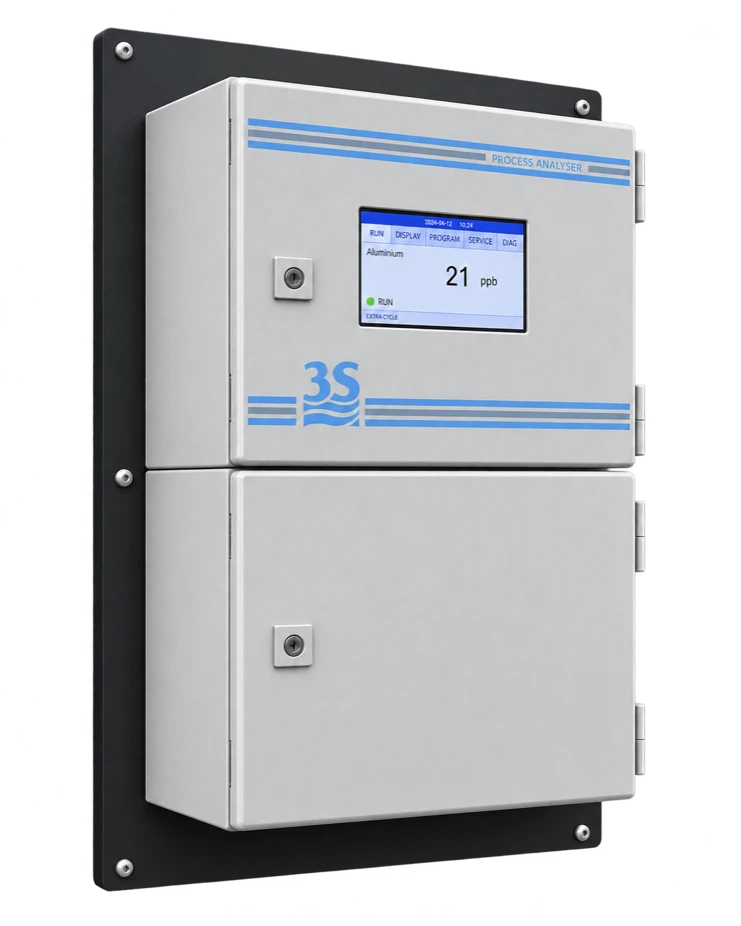
The 3S-CL brochure lists hardness among its available parameters. Confirm the method, range and sample suitability for the specific water and target with PMA. See the hardness-after-softening guide, hardness analyser page and boiler/high-purity-water applications.
Share the target, point and process context using the PMA contact form.