

Why online and laboratory water-analysis results may differ
When an online water analyser and a laboratory report show different values, it is tempting to assume that one result must be wrong. A useful investigation starts more carefully. The two results may represent different water, different time windows, different sample preparation, different analytical methods or even different reporting bases.
The first task is to make the comparison traceable. Record where and when each sample was obtained, how it was handled, which method was used, and how the result was expressed. Only then is it sensible to examine calibration, reagents, sample conditioning or instrument condition.
The Environment Agency’s guidance on selecting a discharge-monitoring approach requires monitoring points to yield a truly representative sample. Its wastewater-treatment guidance similarly explains that influent and discharge points must represent the stream being assessed. An online process analyser is not automatically a statutory sampler, but the same discipline is valuable: decide what water must be represented before choosing how to present it.
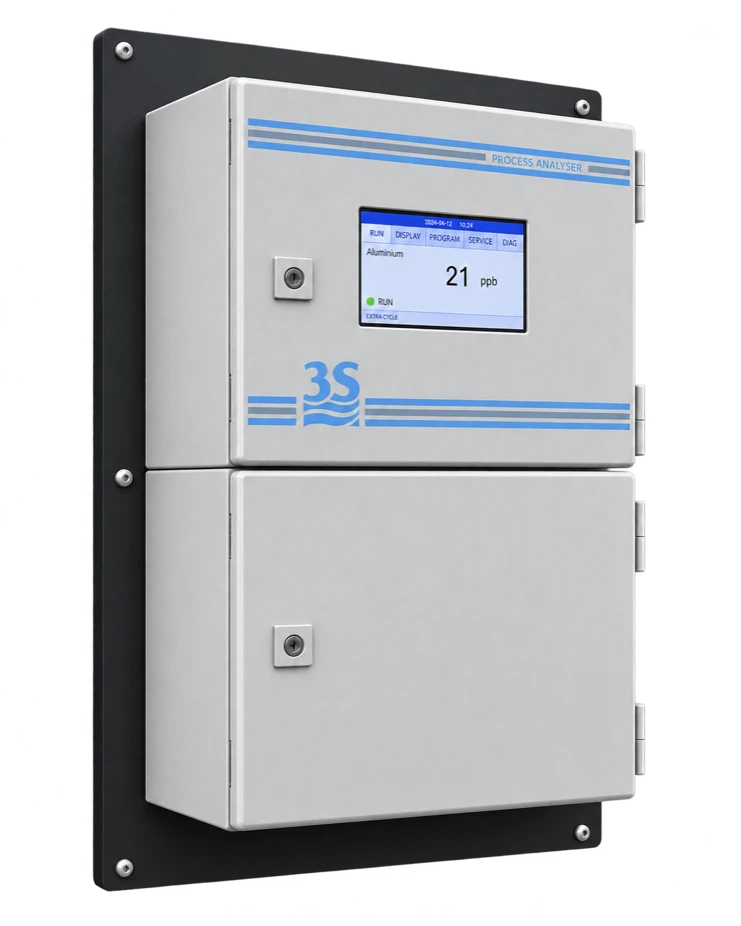
For a configured 3S online colorimetric analyser, PMA reviews the parameter, expected concentration, matrix and sample conditions together. The supplied 3S documentation identifies sample reservoirs, filtration units and external pumps as possible accessories, not universal requirements. The right arrangement follows the application review.
Start by defining what each result represents
Write down the question that each measurement must answer. Is the online value an early indication of a treatment-stage change, a trend at final effluent, a check on a product-water stream or an investigation trigger? Is the laboratory value a spot sample, composite sample, contractual check or permit-defined result? A result designed for one purpose may not be directly interchangeable with another.
Then record the physical conditions at that point:
- water source and treatment stage;
- expected range and how quickly it may change;
- flow, pressure and temperature;
- suspended solids, colour, bubbles, oil or other matrix features;
- availability of power, drain, reagent storage, maintenance access and a safe sample return or disposal route;
- any laboratory or permit sample point that will be used for comparison.
This avoids a common failure of scope: asking an analyser to represent a stream that the take-off point does not actually represent. It also makes the discussion with operations, laboratory and engineering teams much more concrete.
Align the sample location and timing
The word “representative” always relates to a purpose. A treatment operator may need a near-real-time indication at a process stage, while a laboratory result may be based on a different location or time window. Those results can both be valid, but they should not be expected to match exactly without understanding the differences.
For regulated wastewater monitoring, the Environment Agency specifies sample locations, automatic samplers and, in relevant cases, 24-hour composite sampling. The online analyser should be treated as an operational tool unless the separate regulatory method and approval requirements have been confirmed. Do not market or specify it as an automatic substitute for permit sampling.
When a comparison is planned, define it in advance. Note the online sample point, laboratory sample point, timing, sample handling, analytical method, reporting basis and acceptance criteria. This produces evidence that can distinguish an actual process change from a difference in sample presentation.
Check whether sample preparation changes the comparison
Suspended solids can affect sample delivery and, depending on the determination, can affect what the measurement represents. Removing solids may be desirable for a particular wet-chemistry arrangement; in another application, it may alter the question being answered. The target determination and whether a dissolved, particulate or total result is required must be decided first.
The supplied 3S filtration-unit datasheet describes a system that filters suspended solids to provide a clean sample to the analyser. Its backflush arrangement uses compressed air to clean the filter element, while only the quantity needed for analysis is filtered. The available mesh sizes and selectable cleaning interval are configuration details, not evidence that one mesh is correct for every water matrix. The permanent 3S sample-conditioning guide explains the wider selection questions.
For this reason, a proposal should identify why filtration is being considered, the expected solids behaviour, the target measurement basis and the maintenance consequences. It should also consider what happens during unusual process conditions: high solids, low flow, entrained gas, a blocked line or a backflush event. A clean-looking sample is not automatically a representative one.
Compare methods, units and reporting bases
Online wet-chemistry analysis depends on repeatable delivery of the sample into the programmed sequence. The laboratory may use another approved method, preparation stage, calibration approach or reporting convention. The method names, units and reporting bases should be placed side by side before numerical differences are judged. For phosphorus comparisons, the guide to orthophosphate vs total phosphorus monitoring explains why the determination and reporting basis must be agreed before results are compared.
Practical design questions include whether the sample can reach the analyser at a stable pressure, whether the line has a suitable drain or return, whether the sample temperature is within the intended conditions, and whether there is enough flow to refresh the sample without creating excessive delay. Avoid treating the analyser enclosure as the whole installation: sample delivery, drainage, utilities and access are part of the measurement system.
The 3S pre-installation checklist is a useful supporting guide for these site-survey questions. For specific treatment contexts, use the relevant 3S applications page and parameter page rather than carrying a generic filtration choice from one duty to another.
Investigate differences in a controlled order

Sample systems are living parts of a process installation. Lines foul, flows change, maintenance work alters valves and seasonal conditions change the matrix. A commissioning plan should establish the normal sample path and set out how it will be inspected and checked.
The 3S-CL documentation describes configurable automatic calibration, validation and cleaning functions. These functions support the analyser’s programmed operation; they do not remove the need to inspect the sample system, verify the application-specific method or maintain the sample-conditioning equipment.
Keep a clear record of changes to filters, cleaning intervals, sample points, lines, reagents and method configuration. When a trend shifts, that history helps the team determine whether the cause is in the process, the sample system or the measurement sequence.
Build comparison checks into the monitoring plan
An effective application review brings together the water matrix, measurement objective and installation constraints before equipment is selected. It should finish with a written scope that identifies the parameter, intended reporting basis, sample point, conditioning approach, utilities, drainage, maintenance responsibilities and planned verification checks.
PMA’s online colorimetric analyser page provides wider product context, and the PMA process-measurement website states that PMA has over 50 years’ experience supplying, supporting and troubleshooting process analysers. That experience is most useful when it is applied to the actual water, not used as a shortcut around a site-specific review.
Contact PMA about sample conditioning and online analysis
For a useful review, send PMA the parameter, both sample locations, sampling times, online and laboratory methods, units, reporting basis, expected range, recent calibration information, sample conditions and the pattern of the difference. PMA can review the 3S configuration and whether sample presentation or method alignment should be investigated. Contact PMA to discuss the application; a permanent enquiry form can follow this article.
Frequently asked questions
Should an online analyser exactly match a laboratory result?
Not automatically. The comparison depends on matched sample points, timing, preparation, methods, units and reporting bases. Define these factors and suitable acceptance criteria before judging agreement.
Can filtration explain a difference?
It can. Removing suspended material may affect the relevance of the delivered sample to the intended determination. Define the measurement objective and method before selecting sample conditioning.
What should be checked before changing analyser settings?
Check the current result and alarms, sample flow, sample and reagent paths, calibration and validation history, laboratory sample details, units and reporting basis. Avoid changing method settings in response to one unexplained value.
What records make a comparison useful?
Record the online and laboratory sample points, collection times, analyser cycle time, sample preparation, methods, units, reporting bases, calibration status and relevant process conditions.