
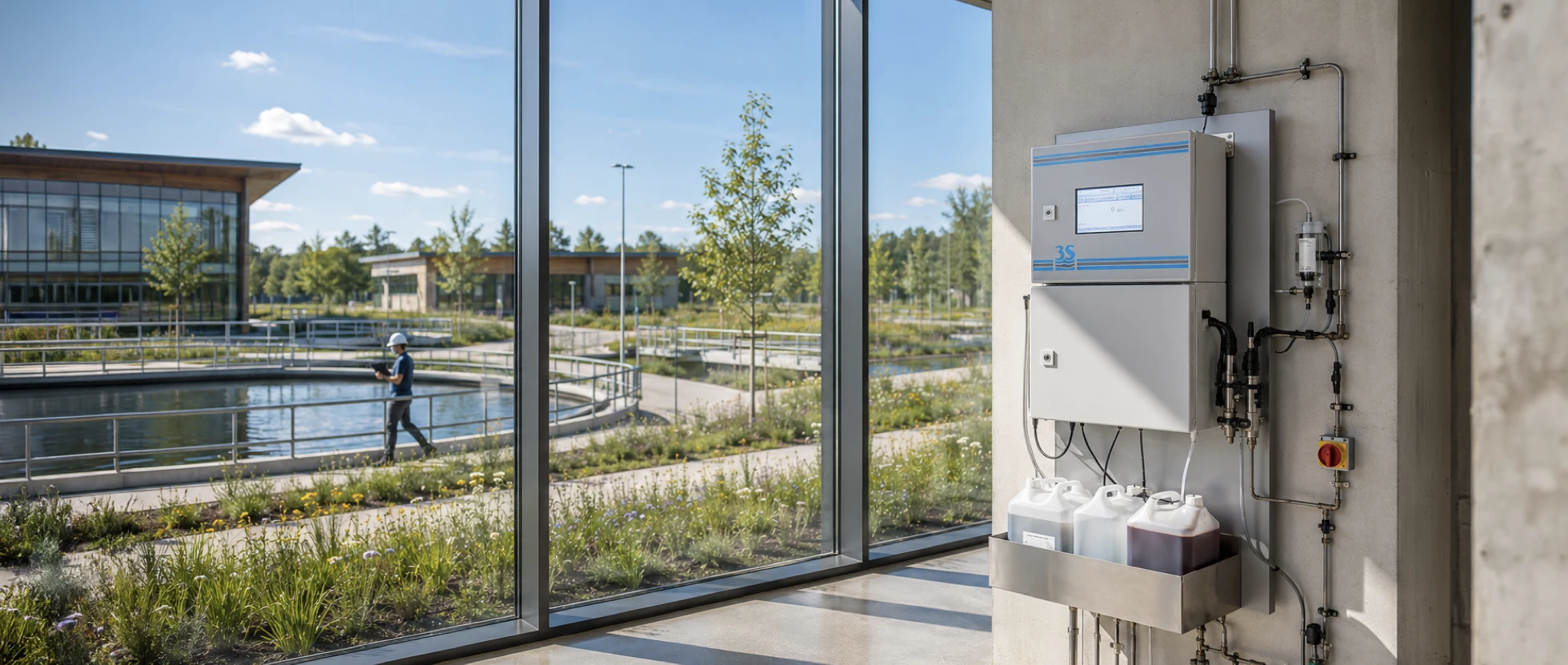
Iron and Manganese Monitoring for Drinking Water
An elevated metals result may begin with source-water chemistry, arise during treatment or reflect deposits mobilised in the distribution network. The useful monitoring point depends on which of those questions the team needs to answer. PMA can review separate iron or manganese measurement requirements and suitable 3S-CL configurations.
Locate the change before selecting the measurement
The Drinking Water Inspectorate associates iron and manganese in drinking water with source water, treatment performance, assets and distribution operation. A single final result cannot always show where the change began. A more useful plan identifies the process stage, the determination required and the operating action the trend should support.
For practical planning guidance, read Investigating Iron and Manganese Results.
Iron and manganese may be considered together in a site investigation, but they are distinct analytical parameters. A shared application page is not a promise that both can be measured in one analyser configuration. PMA must review method compatibility and the actual sample before any combined arrangement is specified.
Where repeated results can help
Source-water behaviour
Start with the abstraction point and the source’s normal variation. Groundwater and surface-water duties may present different concentrations, colour and solids. Choose a representative take-off before setting the analytical range or sample preparation.
Treatment-stage performance
Where removal or carryover is the question, select sample points around the relevant treatment stage. State whether the required result concerns dissolved, particulate or total material; filtration or other preparation can change what the measurement represents.
Distribution and asset signals
Network deposits can be mobilised after changes in flow, pressure or operation. A treatment-works analyser cannot automatically locate a downstream network cause. Interpret online trends with site sampling, event records and the network investigation.
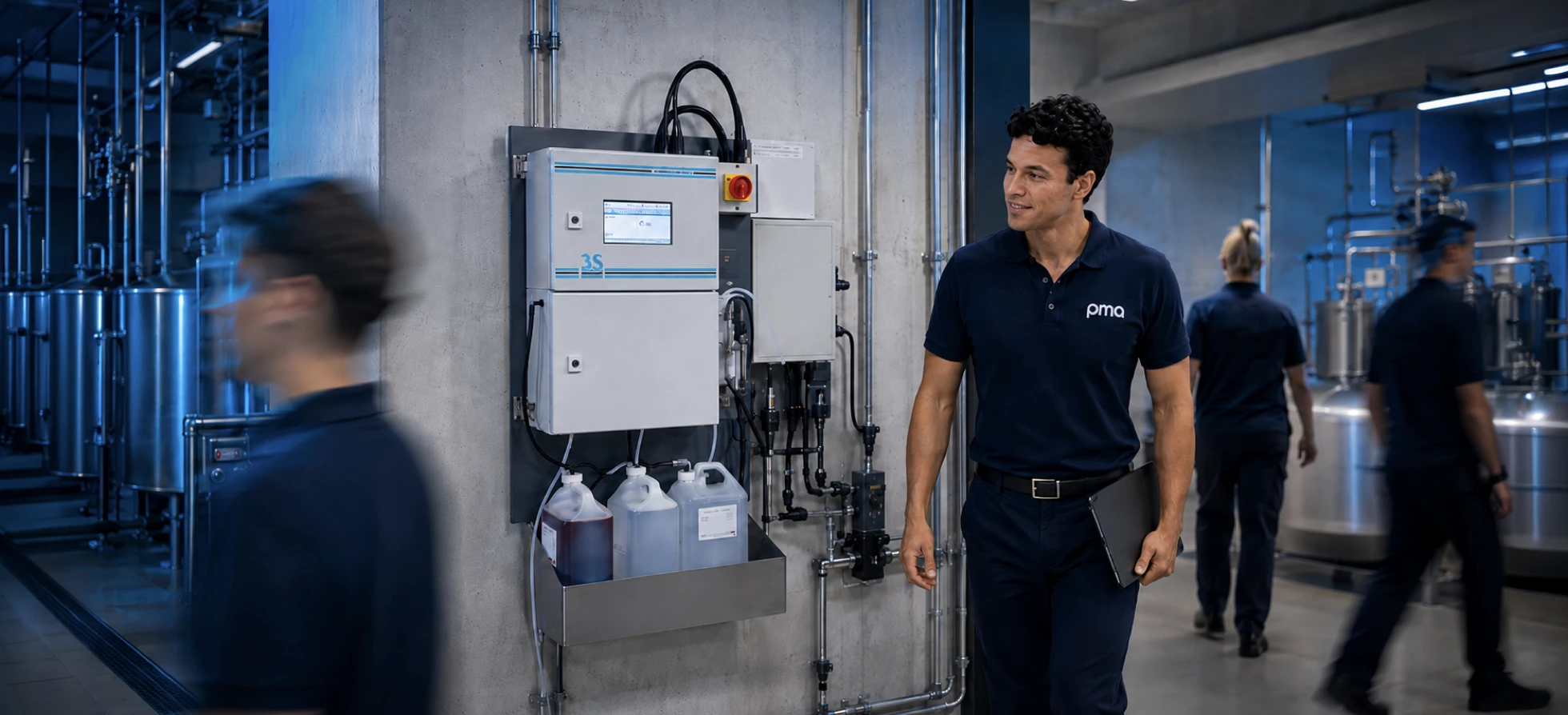
A parameter-specific 3S approach
The current 3S-CL brochure lists both iron and manganese among available colorimetric parameters and potable and surface water among the application types.
The configured analyser carries out the selected reagent reaction and optical measurement automatically. The exact determination, chemistry, range and sample handling are application decisions, not universal values stated by this page.
Specify what the result means
Tell PMA the target parameter, dissolved/particulate/total basis, expected concentrations, sample point, colour and solids, temperature, flow and pressure, and the laboratory method used for comparison. Identify which process or distribution action an upward trend would trigger.
Use the result within the water-safety plan
The DWI says iron, manganese and aluminium together accounted for 29% of chemical failures in water-supply-zone samples in 2025. It expects companies to use monitoring data to identify deterioration and manage treatment and network risks. This context supports careful operational trending; it does not make an online instrument a substitute for prescribed compliance sampling or investigation..
Continue your research
Review the related parameter and application pages before discussing your sample with PMA. Also see Drinking Water and Sample Conditioning.
Discuss Your Metals Monitoring Application
Share the source, treatment or distribution question and the proposed sample points. PMA can review an iron or manganese configuration against the required determination and sample conditions.